
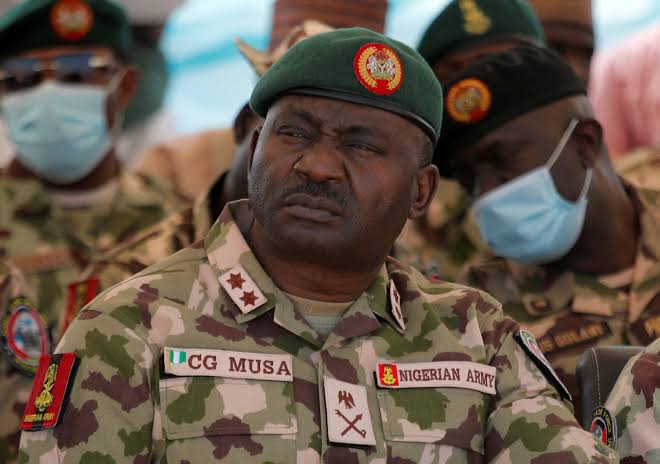
In a bold move to curb escalating insecurity, Nigeria’s Chief of Defence Staff, General Christopher Musa, has proposed fencing the country’s borders with Cameroon, Niger, Chad, and Benin Republic. The initiative, he said, is aimed at stopping the uncontrolled infiltration of terrorists, armed groups, smugglers, and criminal elements through Nigeria’s porous frontiers.
Speaking during a press briefing in Abuja, General Musa noted that Nigeria’s long and largely unsecured borders have been exploited by insurgents and bandits, significantly worsening the country’s internal security crisis. He cited the success of similar fencing projects in countries like Pakistan and Saudi Arabia, stressing that physical barriers could serve as a deterrent and enhance surveillance efforts.
Nigeria’s border with Niger spans over 1,500 kilometers, while its border with Cameroon stretches nearly 2,000 kilometers. The Defence Chief admitted the scale of the fencing project would be massive and expensive, but emphasized that the long-term security benefits far outweigh the costs. He also pointed out that the recent rise in terrorism, arms trafficking, and cross-border crime makes such a move inevitable.
The proposal comes amidst broader security reforms by the federal government, which has earmarked ₦4.91 trillion for defence and security in the 2025 budget—one of the largest allocations in recent years. This budget will also cover military modernization, surveillance technology, and intelligence gathering operations.
However, the proposal has triggered mixed reactions. While many Nigerians see it as a necessary step to safeguard the nation, critics argue it may violate ECOWAS protocols on the free movement of persons and goods. General Musa responded by saying that while Nigeria remains committed to regional cooperation, national security must take precedence over open-border policies when they become a threat to lives and property.
As insecurity remains a top concern for citizens and investors alike, the border fencing proposal signals a significant shift in Nigeria’s security strategy—one that prioritizes physical infrastructure, technology, and regional integrity in the fight against terrorism and cross-border threats.


